

Make your voice heard
ALEBA received by the Prime Minister and the Minister of Labour: a frank exchange on representativeness and the future of social dialogue
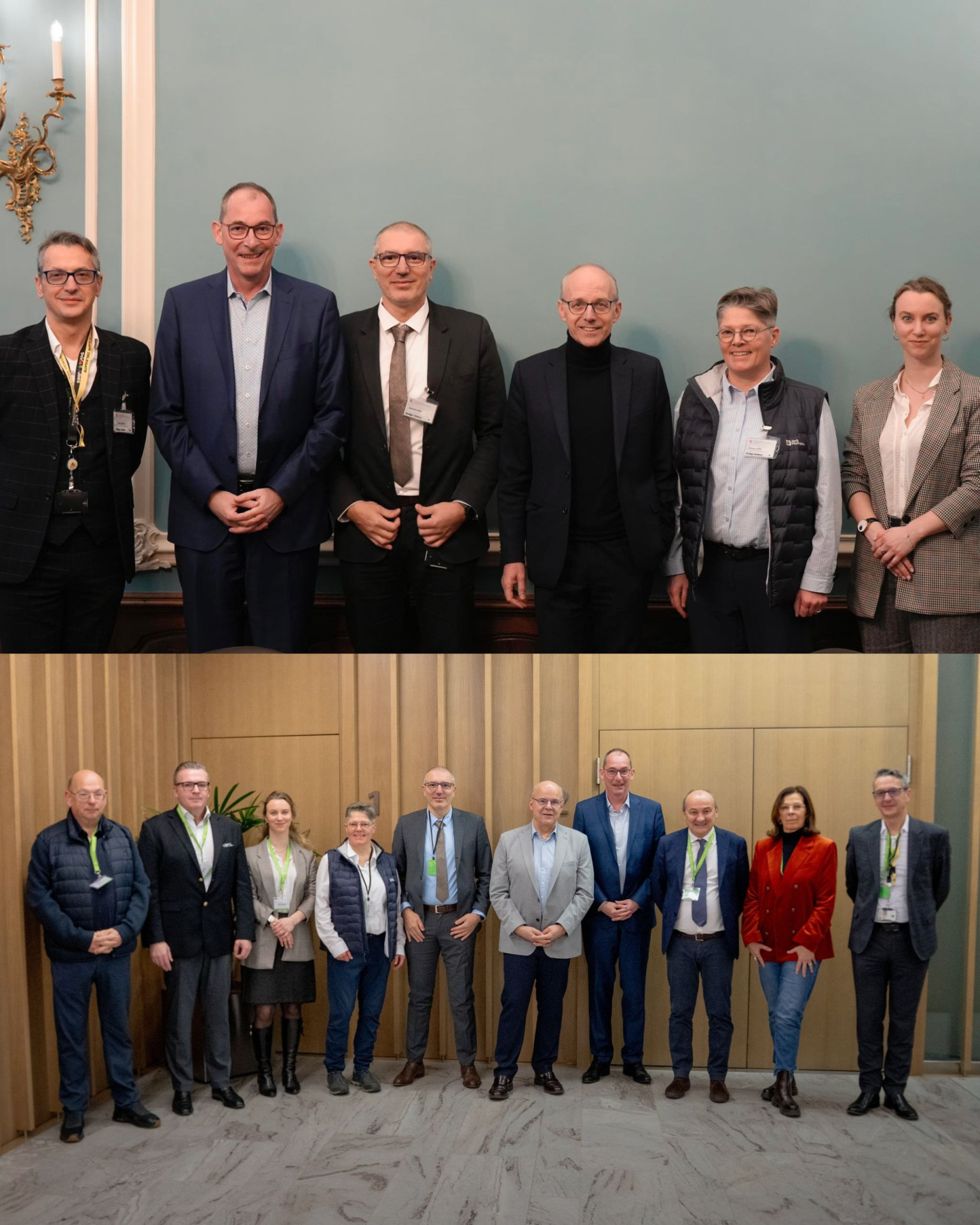
ALEBA received by the Prime Minister and the Minister of Labour: a frank exchange on representativeness and the future of social dialogue
On Thursday 29 and Friday 30 January 2026, ALEBA was received respectively by the Prime Minister, Mr. Luc Frieden, and by the Minister of Labour, Mr. Marc Spautz, for in-depth discussions devoted to the rules on trade union representativeness, the negotiation of collective bargaining agreements (CBAs), as well as the functioning of the Chamber of Employees (CSL).
The President of ALEBA, Roberto Mendolia, thanked the ministers for their welcome. He was accompanied by ALEBA’s Vice-Presidents during the meeting with the Prime Minister, as well as by the Committee of Elders during the meeting with the Minister of Labour.
Persistent discrimination in practice
ALEBA highlighted several concrete situations illustrating the limits of the current legal framework, which ALEBA considers clearly discriminatory.
For example, ALEBA representatives elected at Hôpitaux Robert Schuman (health sector), at Indorama (industrial sector), and at G4S (security services) are excluded from negotiations of their collective bargaining agreements solely because they are not affiliated with a so-called “national” trade union. This distinction, provided for by law, restricts trade union freedoms of any union that does not enjoy nationally representative status, while clearly violating the right of elected representatives to represent their voters.
At Luxair, pilots—who account for 17% of elected representatives—are excluded from negotiations of their own collective labour agreement because they cannot demonstrate 50% of the votes. Meanwhile, union representatives who do not necessarily perform the profession concerned do participate, provided they are affiliated with a national union—even when those unions do not hold 50% of the votes.
Sectoral representativeness and thresholds: a debate to be reopened
From a legal standpoint, ALEBA recalled in both meetings that the 2004 law on sectoral representativeness was stripped of its substance during codification through the unlawful removal of an explicit reference to sectoral unions in a key article relating to CBA negotiations (Article L. 162-1 (1)). ALEBA is calling for this provision to be reinstated in order to restore the spirit of the text originally adopted by the legislator, despite repeated reminders sent by ALEBA to successive Ministers of Labour.
ALEBA also proposed lowering to 20% the current 50% vote threshold required at the CSL to obtain sectoral representativeness, aligning it with the threshold provided for national representativeness. Another option considered would be to take into account 20% of the votes obtained during social elections within companies in the sector concerned. Such a reform would clarify the law (in particular Article L.161-7), strengthen social democracy, and better reflect current labour-market realities.
At company level, ALEBA advocates that every elected staff delegate should be able to participate in CBA negotiations if they fall within its scope of application, thereby abolishing the 50% vote threshold currently required simply to negotiate and represent their electorate.
The Minister of Labour indicated that he would examine the historical origin of the existing thresholds, referring to parliamentary records. He recalled that some rules date from a time when the very structure of the CSL was fundamentally different.
He added that he had reviewed the documents submitted by ALEBA and had informed himself about the legal provisions mentioned. He acknowledged the relevance of the issues raised, while noting that certain provisions stem from specific political and historical choices and contexts.
Although both the Prime Minister and the Minister of Labour demonstrated attentive listening and an understanding of the issues raised, the latter specified that a comprehensive reform of trade union representativeness is not included in the programme of the current coalition agreement, to which he is bound to adhere.
This position is a source of great disappointment for ALEBA, which considers such reform now essential to remove all discrimination and adapt the legal framework to the social realities of the 21st century, in line with the recommendations of the International Labour Organization (ILO). It should be recalled that the ILO ruled in ALEBA’s favour three years ago, yet no concrete measures have since been taken by successive governments.
Luxembourg nevertheless remains a signatory to international conventions guaranteeing trade union freedoms. The current legal provisions, as denounced by ALEBA, are in blatant contradiction with these commitments. This lack of response and political unwillingness to introduce change therefore remain incomprehensible.
Conclusion
When asked about the possibility of a single trade union, both ministers affirmed their attachment to trade union pluralism while stressing the need to frame it through clear rules.
Although the meeting did not result in an immediate willingness to reform, it nevertheless helped clarify positions and confirmed that the issue of trade union representativeness remains a central challenge for the future of social dialogue in Luxembourg.
ALEBA will continue to mobilise for greater pluralism, democratic participation, and fairness in labour relations. It does not seek to restrict the rights of other unions, but to enable all elected representatives to participate fully in decisions affecting the employees they represent.
Failing voluntary legislative change, ALEBA intends to intensify its actions to advance a more inclusive and representative social democracy and takes note of the political framework within which the debate will have to continue.
Summary
ALEBA received by the Prime Minister and the Minister of Labour: a frank exchange on representativeness and the future of social dialogue
On Thursday 29 and Friday 30 January 2026, ALEBA was received respectively by the Prime Minister, Mr. Luc Frieden, and by the Minister of Labour, Mr. Marc Spautz, for in-depth discussions devoted to the rules on trade union representativeness, the negotiation of collective bargaining agreements (CBAs), as well as the functioning of the Chamber of Employees (CSL).
News
ALEBA x Domaine Thermal de Mondorf
Learn more
Mental Health at Work - a conference not to be missed
Learn more
Daniel Wark: The human face of trade union representation at POST Telecom
Learn more
Got a medical certificate online? Here's what to check
Learn more
"The Human Being at the Centre" — Alain Martin, President of the Staff Delegation at Cardif Lux Vie
Learn more
The Right to Disconnect: What Changes from July 2026
Learn more