

Make your voice heard
Daniel Wark: The human face of trade union representation at POST Telecom
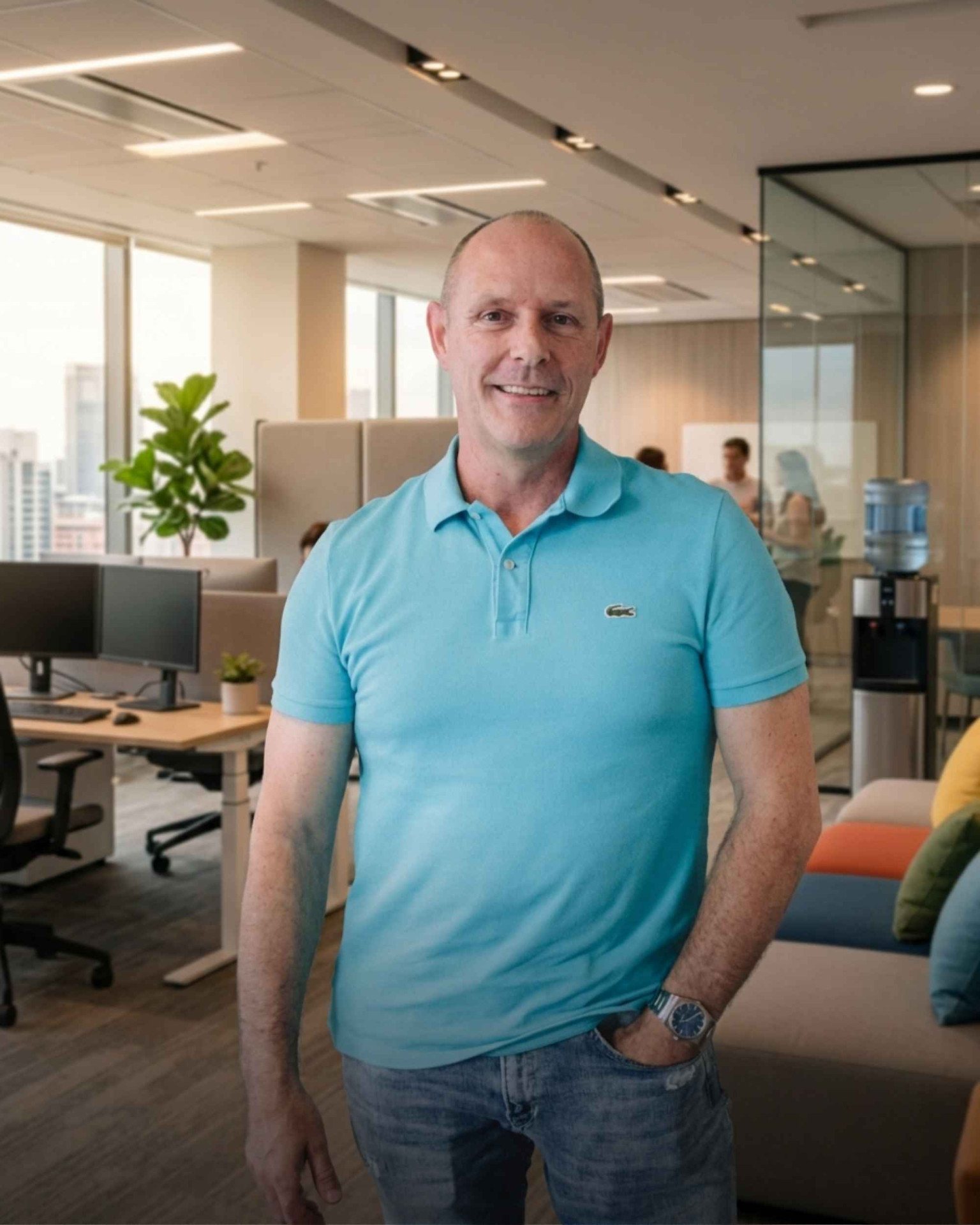
Sometimes it is the unexpected turns that draw the most beautiful trajectories in life. When Daniel Wark first stood in the social elections, he was simply hoping to support his colleagues by completing a list. Elected against all odds to the presidency of the ALEBA delegation at POST Telecom, he had to learn to guide, listen to and defend a community of employees now numbering nearly 900 people. Now with three terms of experience behind him, his journey shows that trade union representation is, above all, a human endeavour — an attentive and reassuring presence capable of adapting to the company's fast-paced evolution.
POST Telecom has, in fact, become one of the companies outside the financial and insurance sector where ALEBA has established its strongest presence, notably thanks to the commitment of Daniel and his colleagues from the staff delegation. On November 13, 2025, following negotiations led mainly by Daniel, a new Collective Labour Agreement was signed, entering into force on January 1, 2026, for a two-year period. It secures existing benefits alongside a 2.5% salary increase.

Daniel's career began in the IT sector, first at Telindus (later acquired by Proximus), then at CMD, a private company using the LUXGSM telecommunications network of P&T Luxembourg. Over time, CMD was bought out by POST, eventually becoming POST Telecom. "When I started at CMD, there were 19 of us. Today, we are almost 900," he notes, reflecting the massive growth he has witnessed from within. His union involvement was triggered by a very specific frustration in 2013: the delegation in place at the time, made up of other major unions, had negotiated a collective agreement behind closed doors. "They signed something without anyone knowing, very quickly. And it wasn't a very good agreement at the time. We didn't like that," he explains. Determined to bring back transparency, Daniel and his colleagues decided to form a neutral, independent list. They needed legal backing but wanted to avoid the political affiliations common to other unions. Through professional connections, they turned to ALEBA, which was itself looking to expand beyond the finance sector at the time. The partnership has never wavered since.
Under Daniel's leadership, the POST Telecom delegation, with ALEBA's support, has secured substantial wins for its employees, often navigating the complexity of merging different corporate cultures and legacy contracts. During the recent mergers with Elgon and EBRC, the challenge was considerable, particularly when it came to harmonising working hours and leave entitlements.
"Previously, employees received 27 days of leave upon joining, rising to a maximum of 30 days after more than 25 years of seniority," Daniel explains. "Following the latest merger, we managed to negotiate a base entitlement of 32 days of leave, rising to up to 37 days by the end of one's career. That's a major benefit."
The delegation also succeeded in protecting flexible working hours. The evolution of the salary scale is another major achievement: whereas previously an employee only progressed every five years, reaching the final step after 21 years of seniority, progression now happens every two years, and the ceiling has been pushed back to 30 years of seniority, making careers far more attractive. On top of this come a guaranteed half thirteenth month's salary, an evaluation-linked bonus, improvements to car leasing conditions, and an acquired right to 12 hours of medical appointments per year for each employee.
Despite these impressive structural advances, it is in day-to-day individual support that Daniel finds the greatest satisfaction. "What I like most is helping people," he confides.
"Whether that's negotiating something on their behalf or simply offering moral support before a difficult meeting. If I can make people feel better, that's my main goal."
This human approach is vital in a constantly changing company, where mergers inevitably bring reorganisations, changes to job descriptions and, at times, redundancies. In these moments of tension, having a dedicated union representative makes all the difference.
"I always tell people: it's good to be unionised, and ideally you'll never need it. But when there are legal questions, unfair dismissals or harassment, you need that support. Knowing you're not alone restores confidence."
For Daniel, the choice to align with ALEBA was carefully considered and rests on one fundamental value: independence. "For me, ALEBA was an obvious choice because it's the only politically neutral union," he states. "This neutrality carries distinct advantages. We are not sponsored by politicians, and we don't mix politics with work within the company." He also appreciates ALEBA's respectful approach to membership, preferring to convince by example rather than through pressure. As POST Telecom continues to grow, integrating an increasingly international workforce and preparing for technological challenges such as artificial intelligence — which Daniel sees more as an opportunity for integration than a threat — his mission remains clear. With the next social elections approaching, the goal is to continue protecting employees' rights and to make ALEBA's values known to new colleagues. As Daniel concludes with conviction: "If we didn't have trade unions, we wouldn't be where we are today. The stronger a union is, the more members it has, and the more power it has to make things change. It's as simple as that."
News
A great victory for an ALEBA member!
Learn more
ALEBA Calendar 2027
Learn more
Taxx.lu and ALEBA are now partners
Learn more
ALEBA x Domaine Thermal de Mondorf
Learn more
Mental Health at Work - a conference not to be missed
Learn more
Daniel Wark: The human face of trade union representation at POST Telecom
Learn more