

Make your voice heard
Human capital at the heart of the company: an Interview with Fabrizio Ciardiello
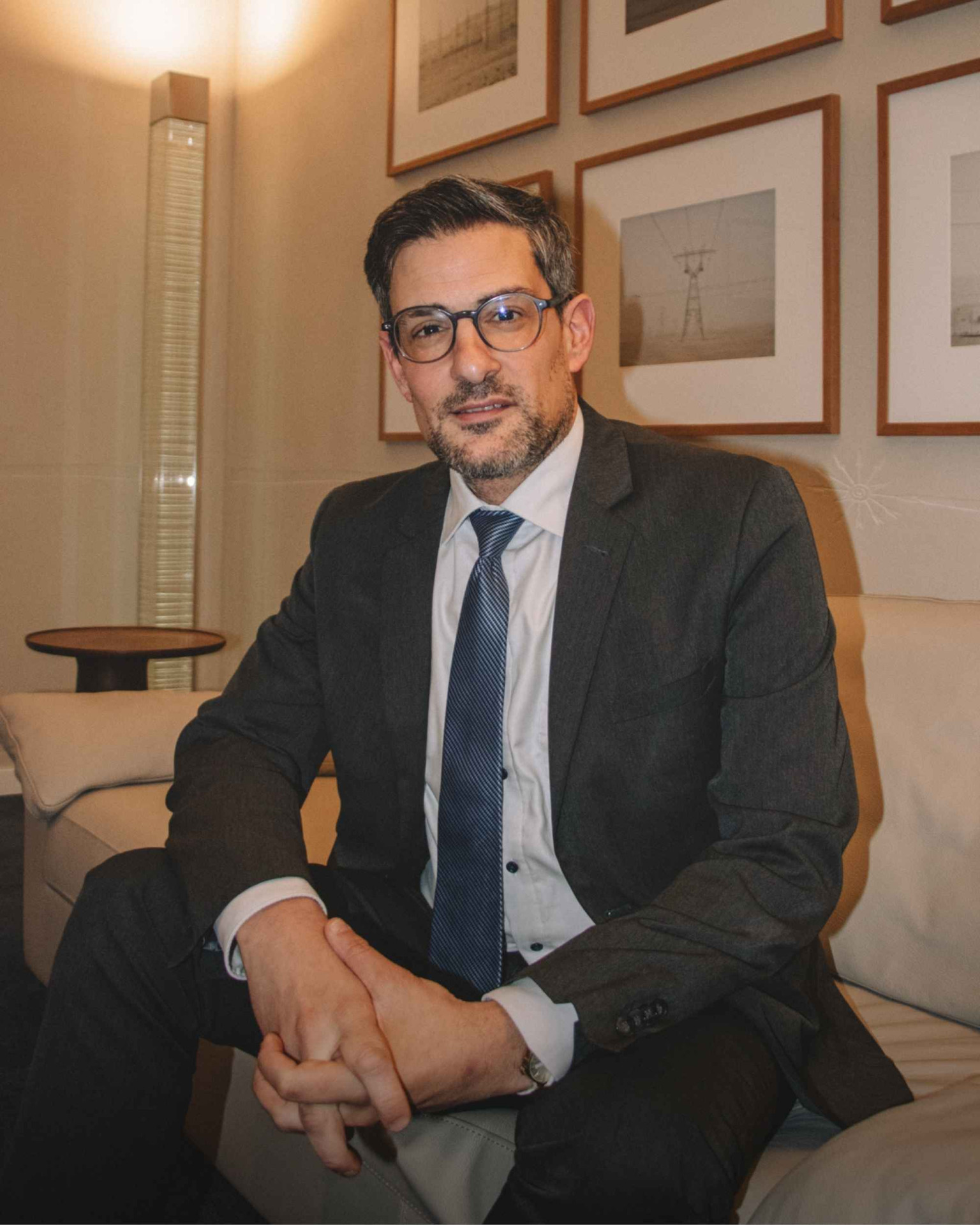
Fabrizio Ciardiello’s introduction to the Luxembourg financial world did not take place in an executive office, but rather through the sorting and distribution of mail. Born in Switzerland and raised between France, Italy, and Luxembourg, he began his journey as a student working at the European Investment Bank. Later, while continuing his studies, it was during his time working as a valet and bellboy at the concierge desk of Hôtel Le Royal that he had a true epiphany. There, he learned that the most valuable skill in the professional world, regardless of the sector, is human connection.
It was this presentation skill and an innate sense of service, coupled with his fluency in several languages, that opened the doors to Edmond de Rothschild for him in 2006. Nearly twenty years later, he still works there as a Client Relationship Manager. Naturally, Fabrizio took on another role among his colleagues: that of a confidant and mediator. He admits that he has always enjoyed helping others, without even realising that this closely mirrored the role of a staff delegate. Viscerally opposed to injustice, he nevertheless specifies that this demand for fairness must work both ways: a delegate must know how to defend an employee against an abusive boss, but must also remain objective if an employee crosses the line.
This sense of justice took on a very concrete dimension in 2015. That year, a part of the bank’s activity was outsourced, resulting in the transfer of 150 people to another entity. Fabrizio observed the impact of trade unions first-hand. He saw how their intervention helped to reassure the teams and ensure a transition with no job losses. It was a true revelation regarding the necessity of having strong internal representation.
History repeated itself in 2024, when the bank decided to part ways with its Asset Management activity. For Fabrizio and his colleagues, remaining mere spectators of decisions that would impact their lives was no longer an option. Aware that such operations often result in collateral damage, they decided to set up their own trade union list to be at the heart of the negotiations. Pushed by his peers, who appreciated his unifying profile, Fabrizio—who initially only wished to be a deputy delegate to cover for a lack of time—found himself elected President of the delegation with a majority of votes.
To carry out this mission, he chose ALEBA, a trade union whose philosophy perfectly matched his temperament. Unlike other organisations that he sometimes found too politicised, he discovered within ALEBA a diplomatic and calm approach. The objective is not to oppose on principle, but to find sustainable solutions through discussion. This method bears fruit on a daily basis: his delegation, composed of members who have mostly known each other for over fifteen years, has managed to establish a solid climate of trust with management. During recent internal reorganisations, this position of benevolent neutrality allowed them to defuse tensions between certain departments and management, helping each party take a step towards the other.
When asked about the future of labor in general, Fabrizio insists on an urgent return to the fundamentals. For him, a company simply cannot function without its employees; human capital must therefore become the absolute priority of executive committees once again. Collective bargaining agreements and the actions of trade unions like ALEBA are, in his view, the only true insurance policies to protect workers against this drift towards profitability at all costs.
Even in the face of the upheavals brought on by artificial intelligence in the Luxembourg financial sector—particularly for support functions—his pragmatism prevails. While he acknowledges that AI will transform the market, he prefers to view it as a tool that, much like the arrival of the calculator, will free up time for tasks with higher added value. Above all, he points out that human connection—the very thing that propelled him from Hôtel Le Royal to the presidency of a delegation—can never be automated.
To those beginning their professional careers today, Fabrizio’s advice boils down to three pillars: join a trade union as early as possible to ensure you are well advised, strive to see solutions rather than problems, and always nurture your human relationships. Because, as his twenty years of experience have taught him, the good we do for others always finds its way back to us.
News
Extraordinary General Meeting – 24 June 2026
Learn more
Pressure, overload, harassment: a reminder that ALEBA has your back at the Big Four
Learn more
Happy National Day to all!
Learn more
Goodbye HAL, Welcome ABN AMRO
Learn more
Reminder: the loyalty bonus provided for in the Banking Collective Agreement is also subject to indexation
Learn more
ALEBA Ordinary General Meeting
Learn more